St Mary’s Church
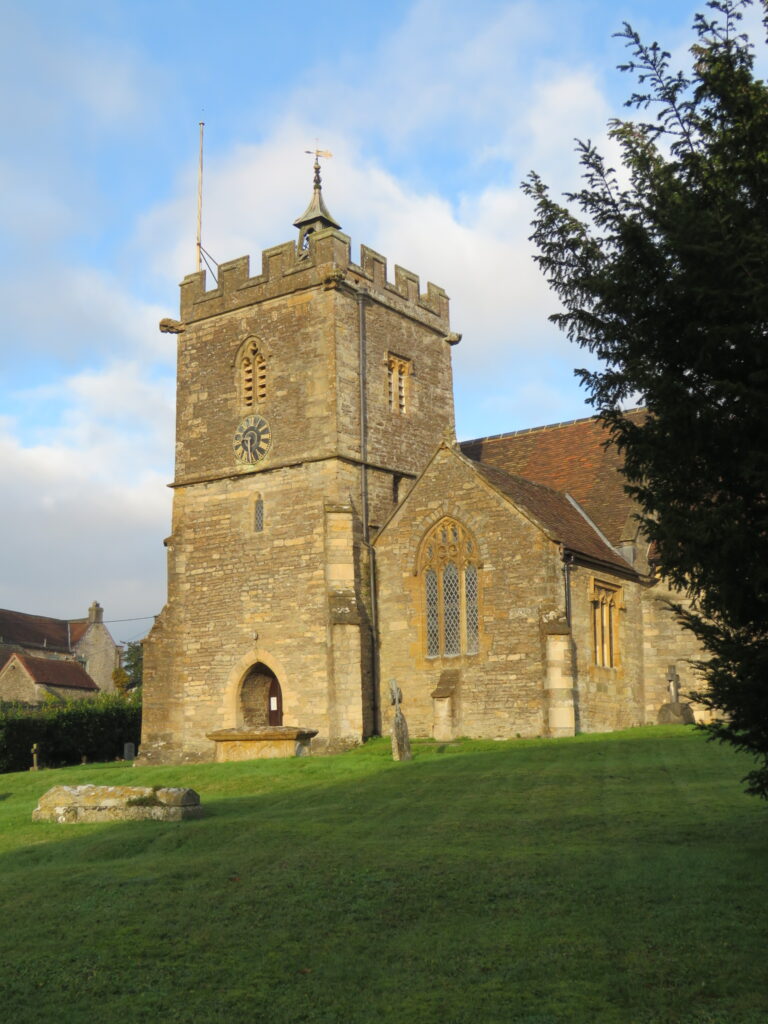
The Church of St Mary the Virgin is situated on Church Hill, Templecombe and is part of the Diocese of Bath and Wells within the Church of England. The Church was built in the 12th century and is a Grade II* listed building. Parts of the original 12th-century church remains; however it underwent a major Victorian restoration in the 19th century, which included a complete rebuilding of the chancel and the addition of the vestry. The foundations of the tower are probably Saxon.


The Church was damaged by bombing in World War II; four bombs falling near the Church on its southern side damaging some of the arches in the nave along with the roof and tower, breaking some of the windows and damaging the organ.
The entrance porch is at the southern end of the Church at the base of the two-stage tower. The buttresses were added after the tower was built. The oldest bell in the tower was cast at the Salisbury foundry around 1420. A further two bells were cast by Robert Purdue in 1656 and two more were cast in 1736 by Thomas Bilbie of the Bilbie family. The most recent bell is from 1891. The bells were restored in 2015.
The font was made from Purbeck Marble in the 12th century and the cover is from 1897. The Church plate consists of a cup and cover from 1628, two salvers made by Anthony Nelson in 1725 and a flagon from 1845.
The Head Painting
In the Church is a painting on wooden boards of a head, which was discovered in the roof of an outhouse of the local building in 1945. The tenant of the cottage was collecting wood in the outhouse where part of the ceiling had fallen down. She noticed a face above her which was on a wooden panel fixed by wire to the inside of the roof and previously plastered over. The painting is thought to be from the 13th century and connected with the Templecombe Preceptory (or Combe Templariorum) which was established in the village in 1185. It was given to the Church in 1956.

Restoration work in the 1950s and again in the 1980s has identified gold stars on the picture and microscopic evidence of bright colours which are no longer in evidence. The colours were present in the 1940s when it was discovered, but impaired when the local vicar at the time cleaned it in his bath with Vim. The addition of a keyhole and hinges at some time in the part suggests it was used as a door.
For many years the head has been believed to be that of Christ but without the halo which was the norm in religious iconography at the time. There has been speculation linking the image with the Shroud of Turin. Other explanations suggest the image is not of Christ but of John the Baptist.
Ongoing Restoration
There is a committed fundraising working group that meets on a regular basis to arrange events. Fundraising and grants enabled work to start on repairing the roof in January 2018. At the end of 2019 a project was undertaken to replace the oil fired central heating with electric heating. In July 2020 the interior of the Church and Vestry was re-decorated along with any necessary plastering work.
If you would like to know more about the fund raising efforts or simply contribute you can contact the Treasurer on 01963-370382.
Regular Services
Normally a service is held each week at either 9.30 am of 11.00 am but due to Covid-19 this has not been possible recently.
Further information and weekly updates can be found at:
www.achurchhearyou.com/church/10903/
The United Reform Church
The URC is located on the High Street next to the Co-Op store and set back from the road. The Church, which is part of the South Somerset Group of Reformed Churches, has a small congregation and meets for worship every Sunday at 11a.m with Holy Communion once per month.
A craft group meets every Thursday between 7pm and 8pm to exchange tips and ideas followed by a Table Tennis group of mixed ability including all ages from 8pm to 9.30pm.